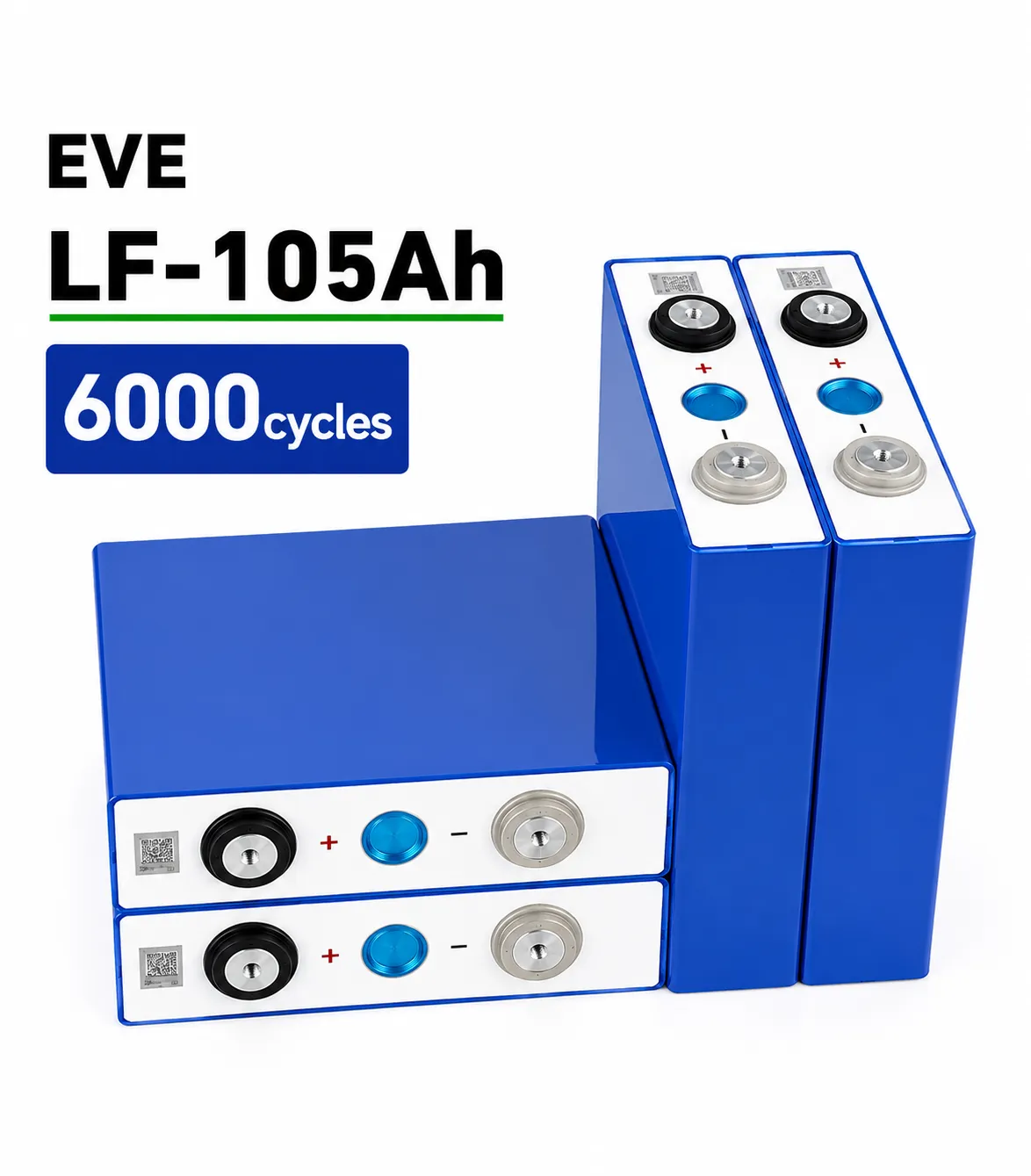
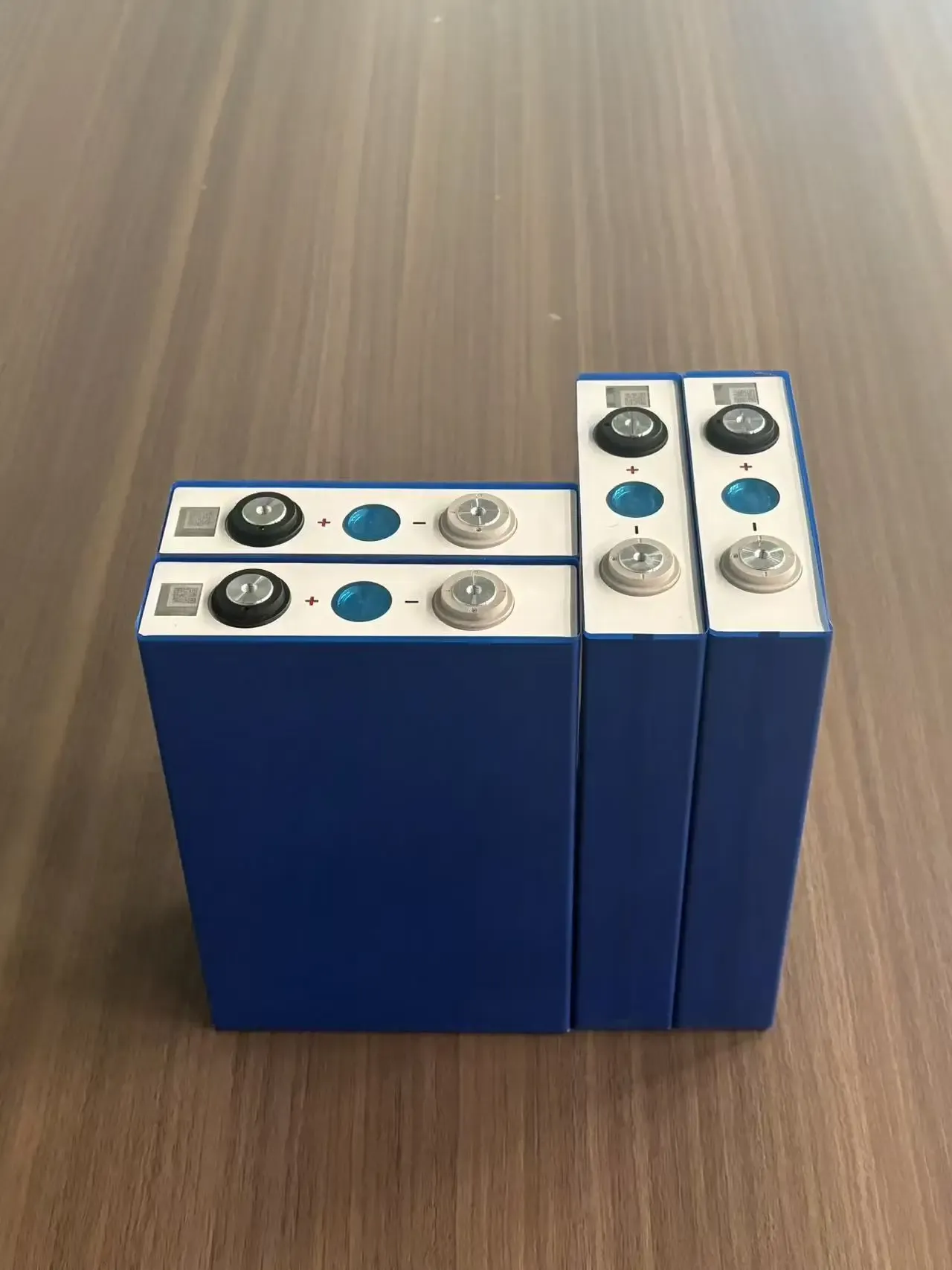
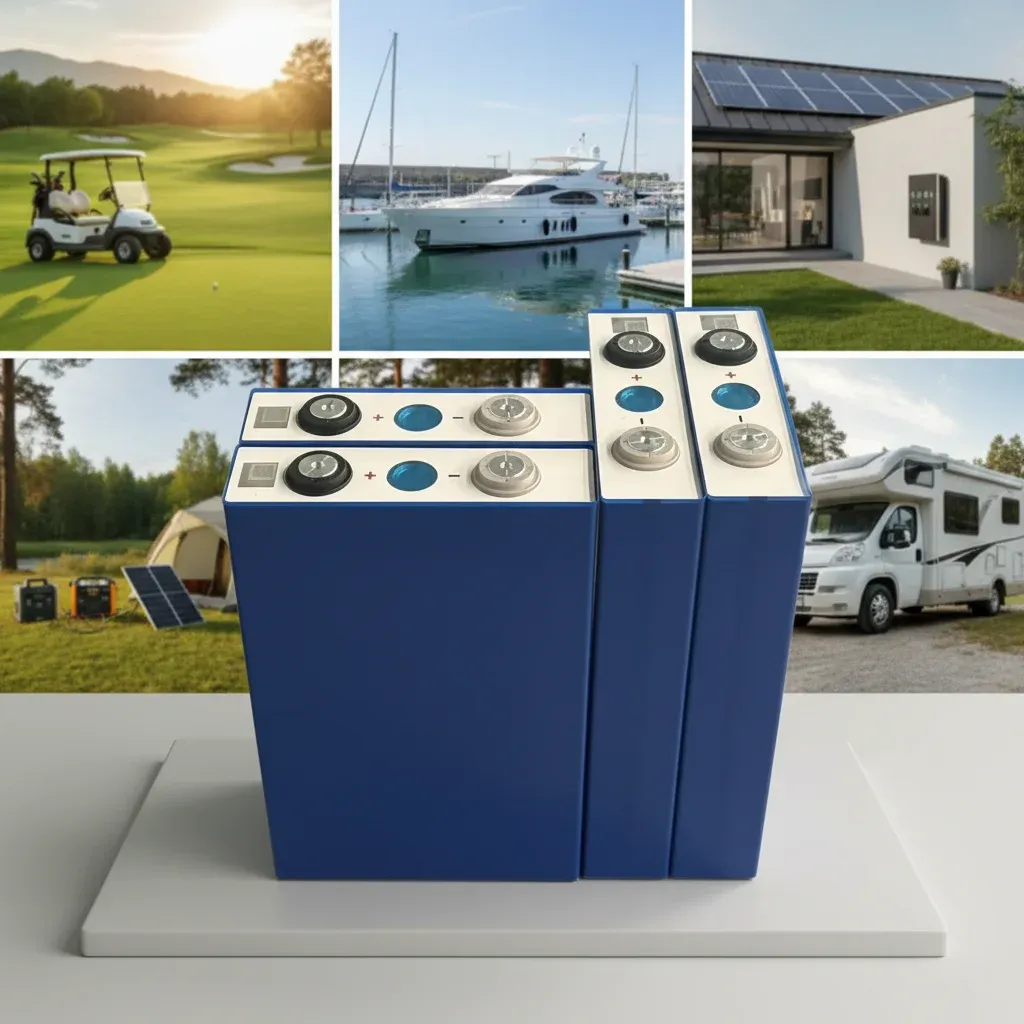
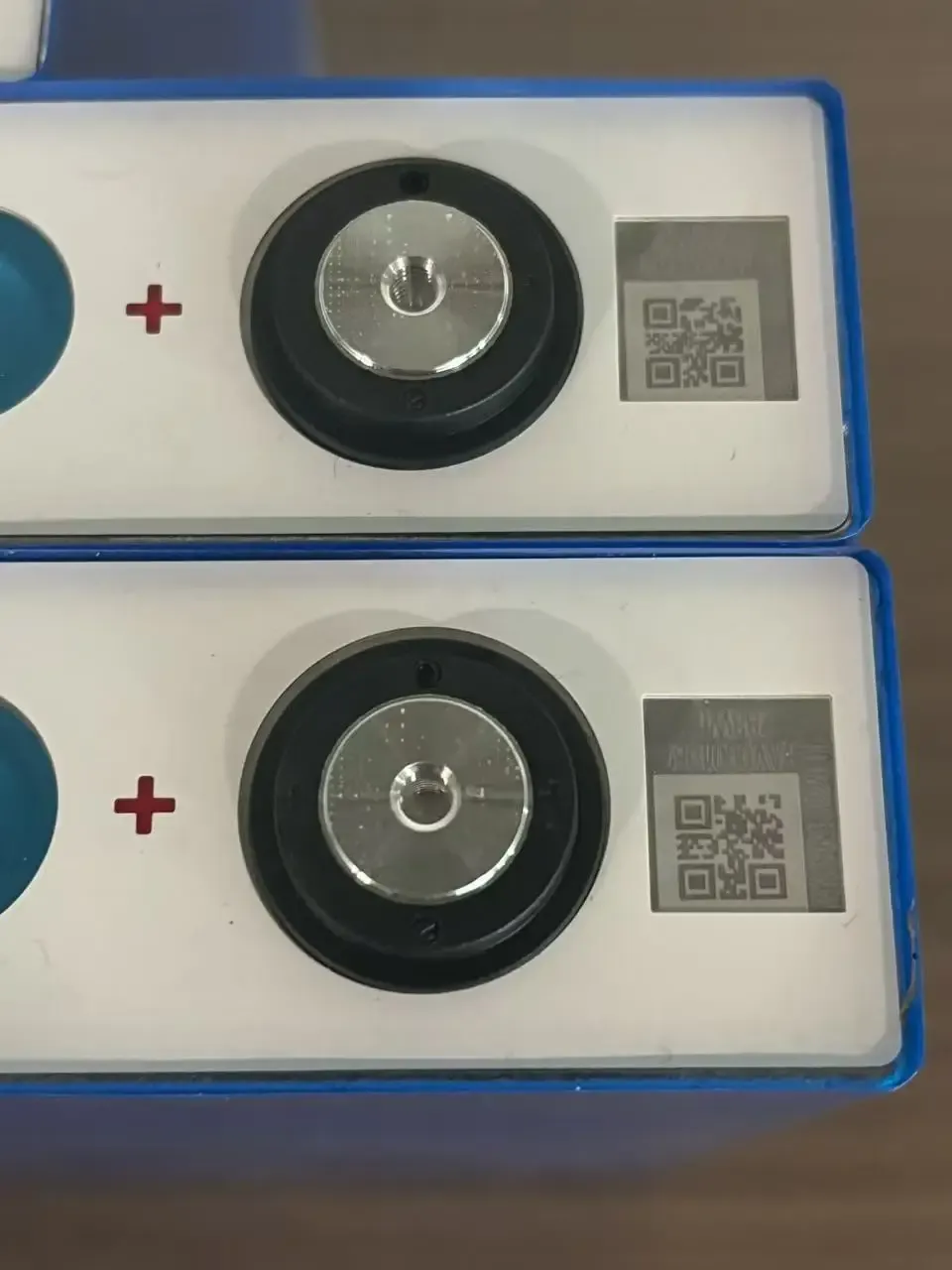
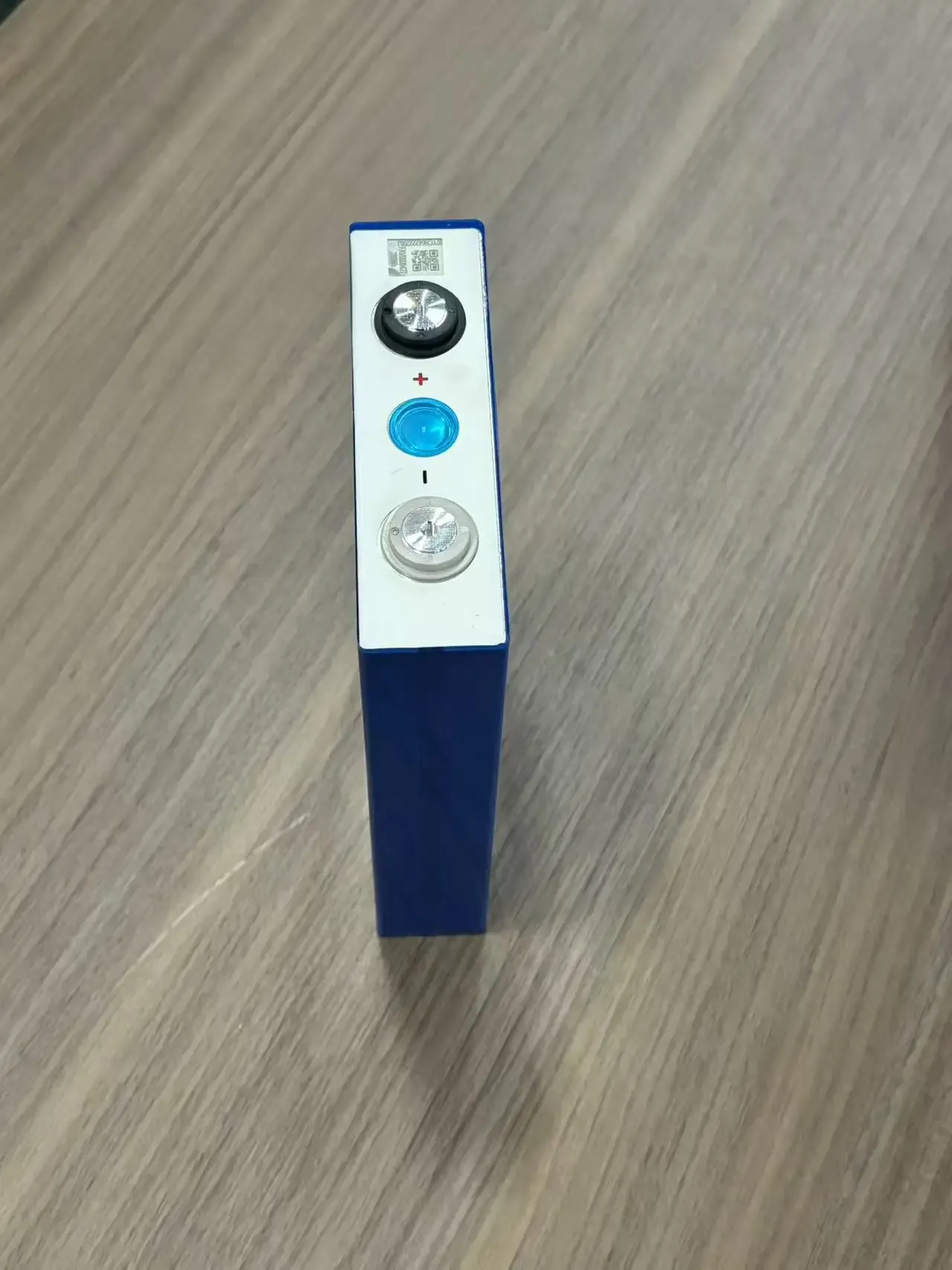
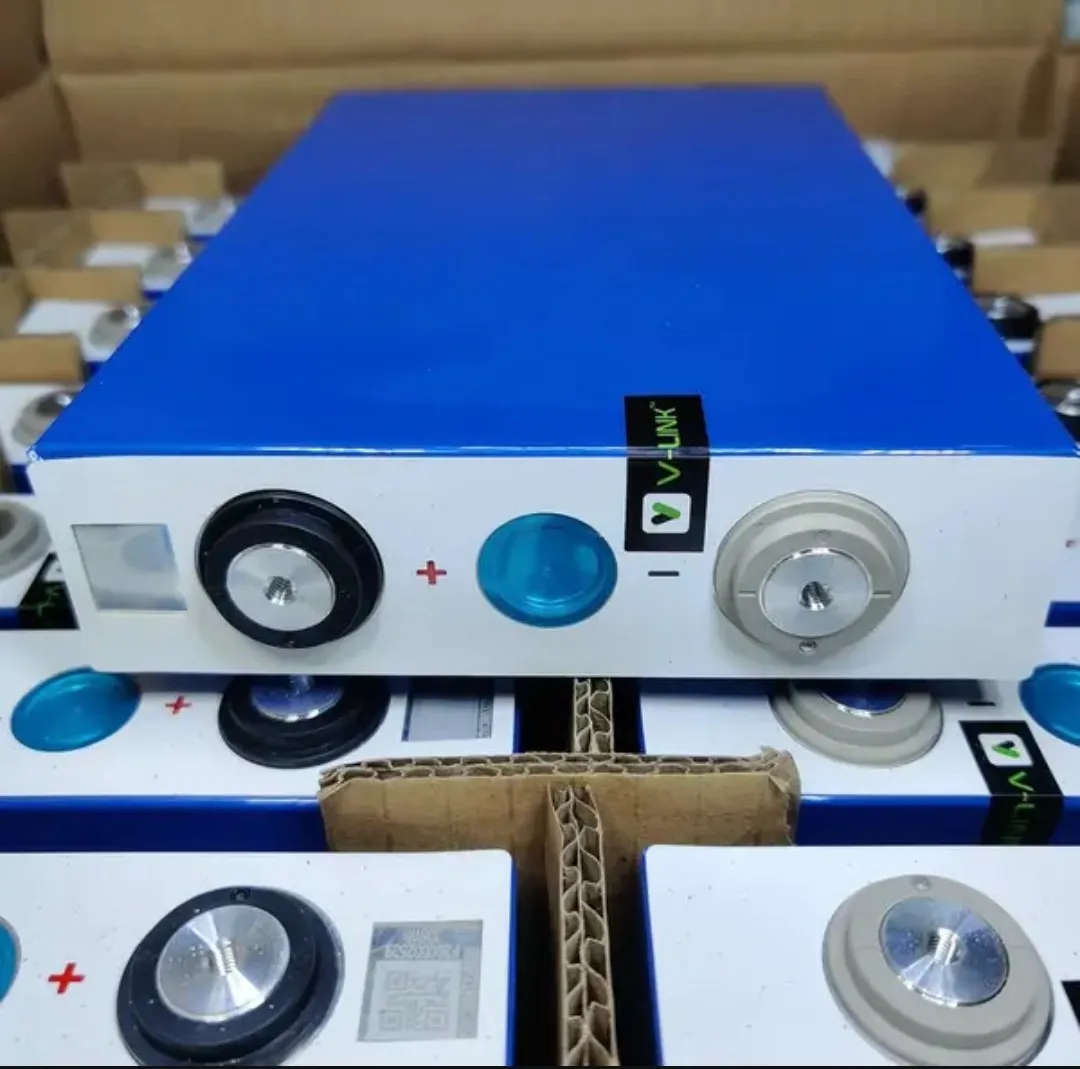
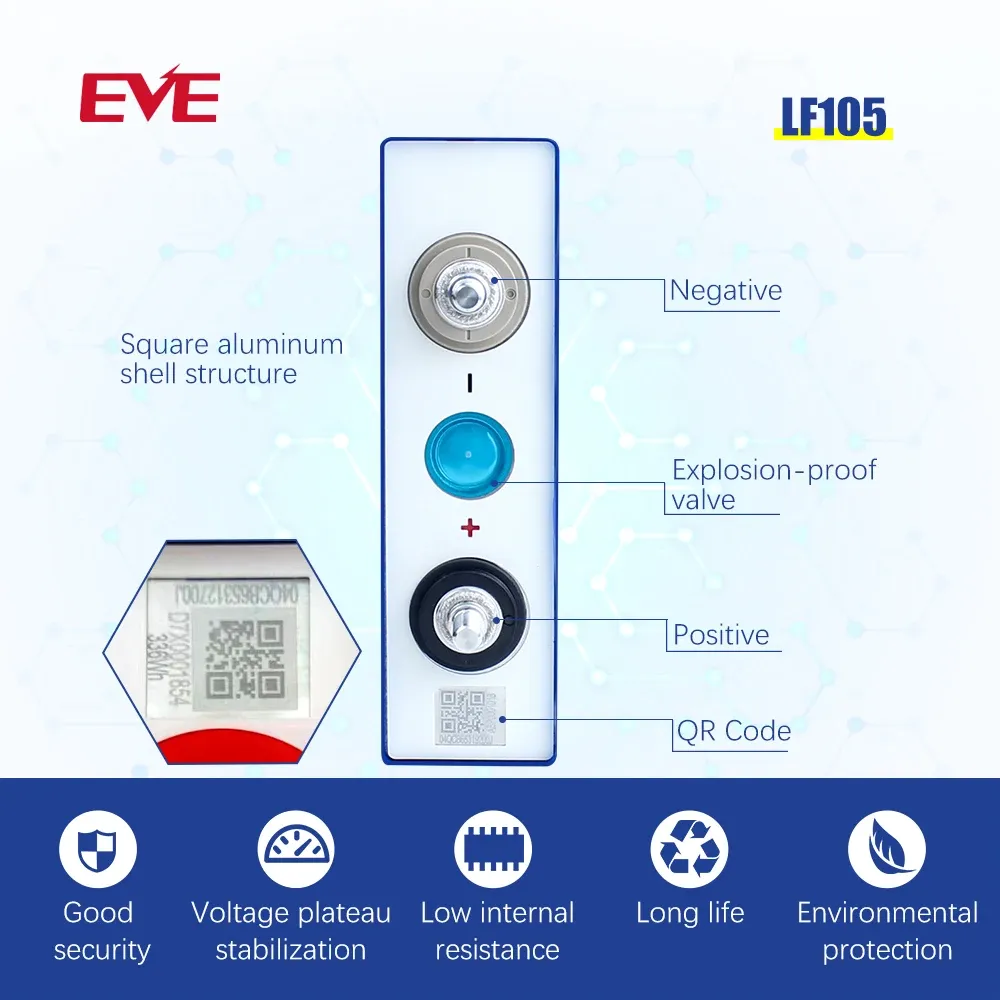
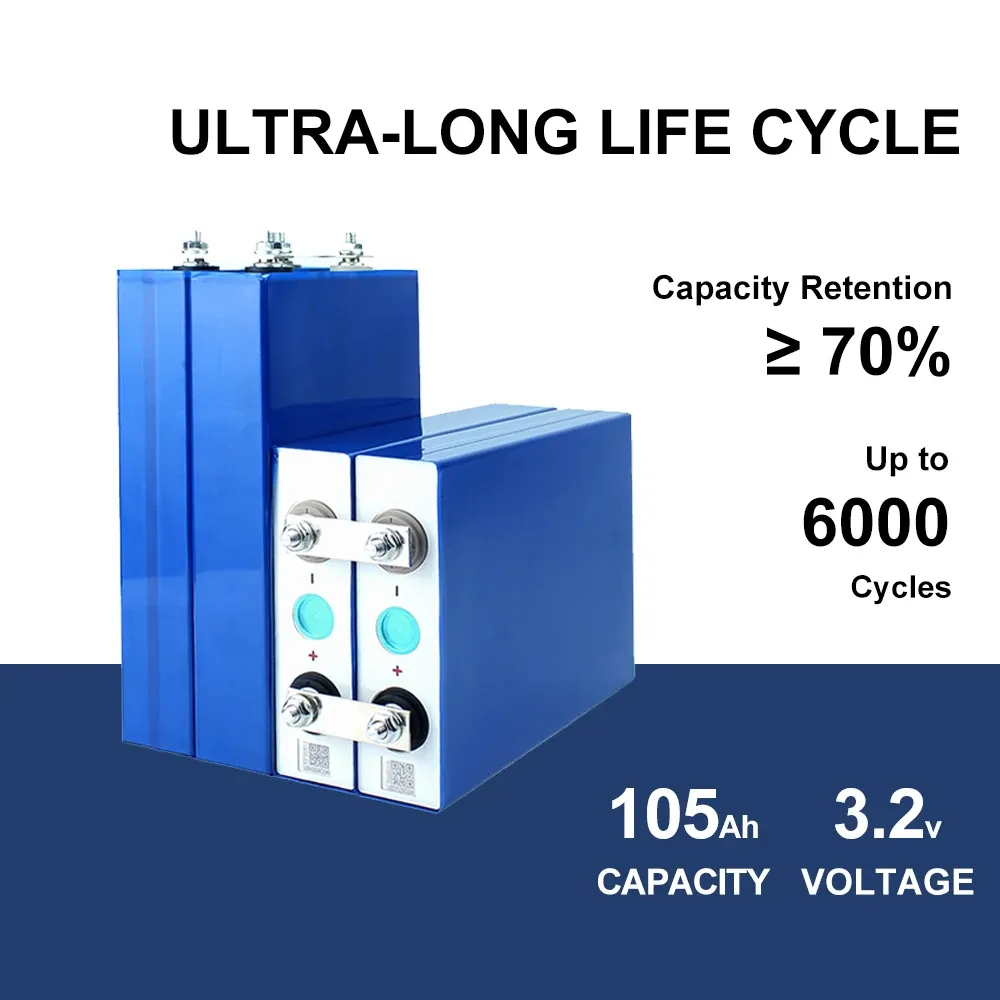
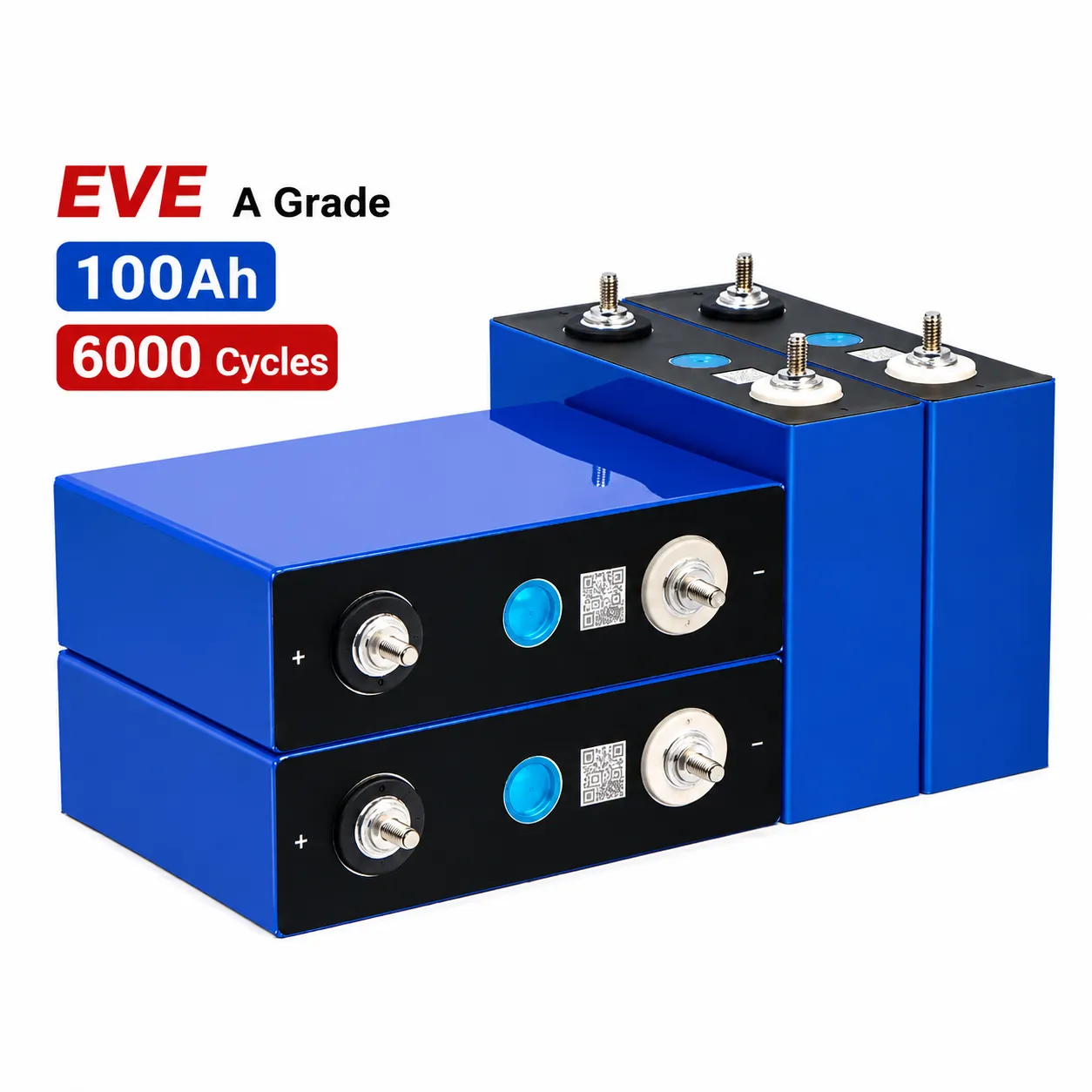
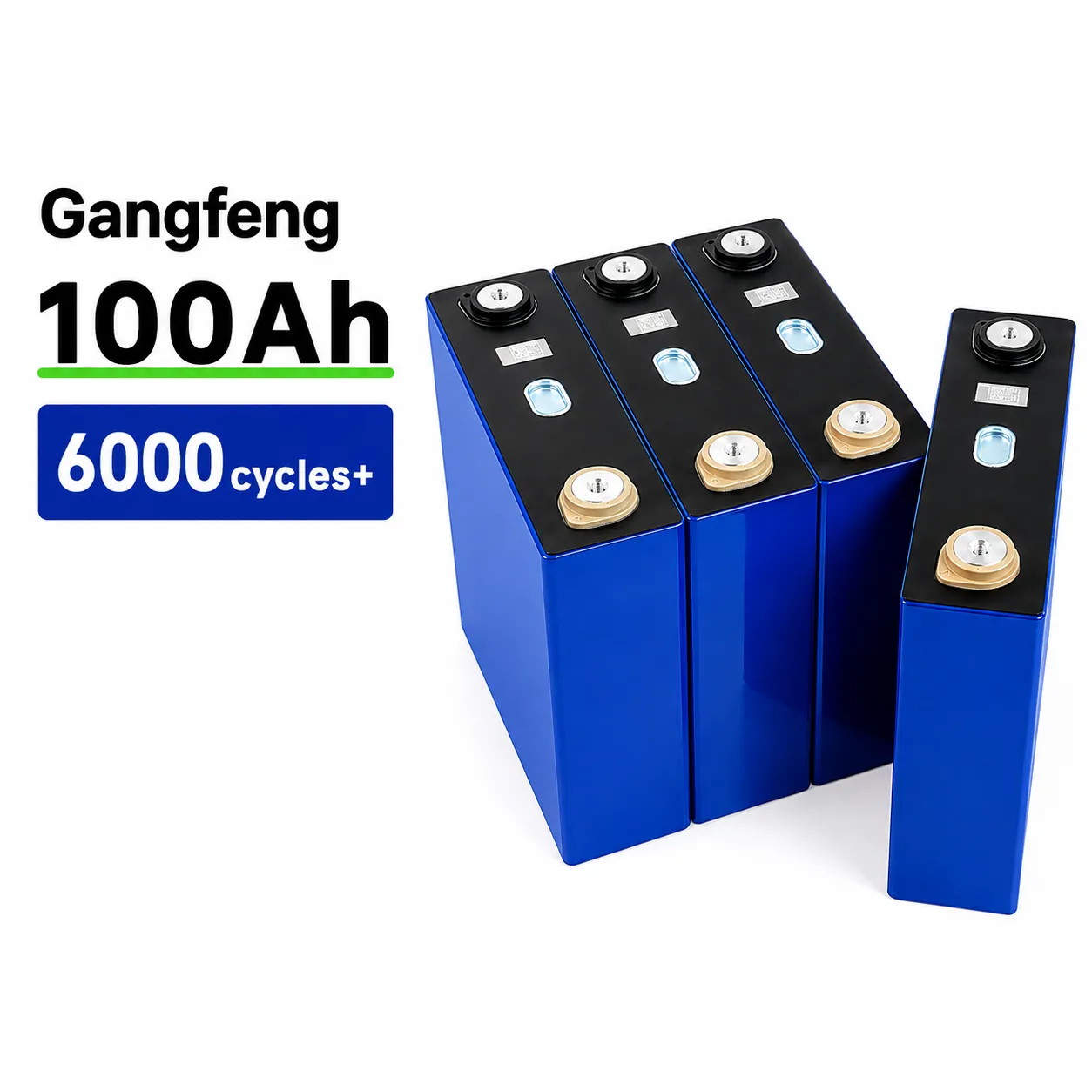
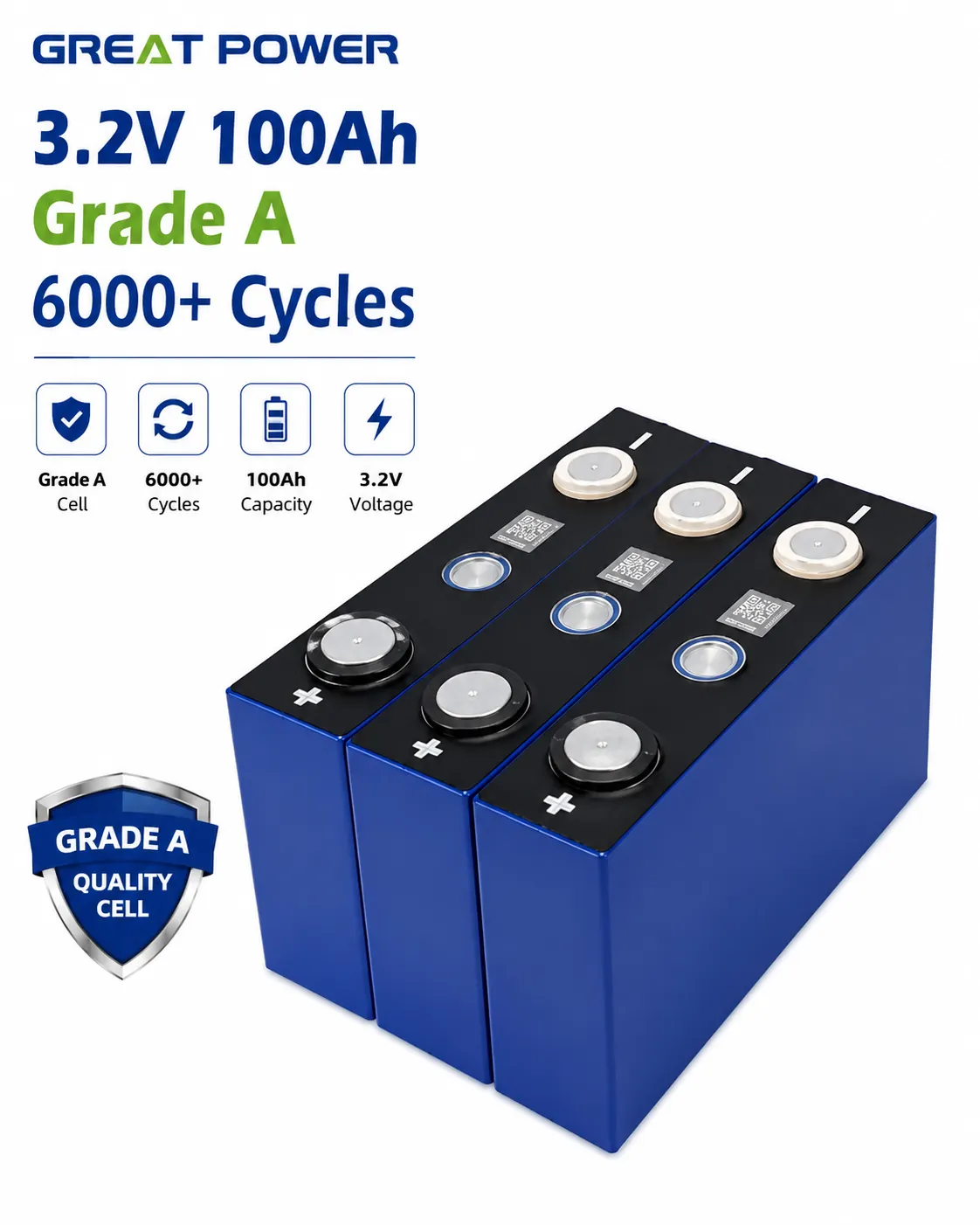
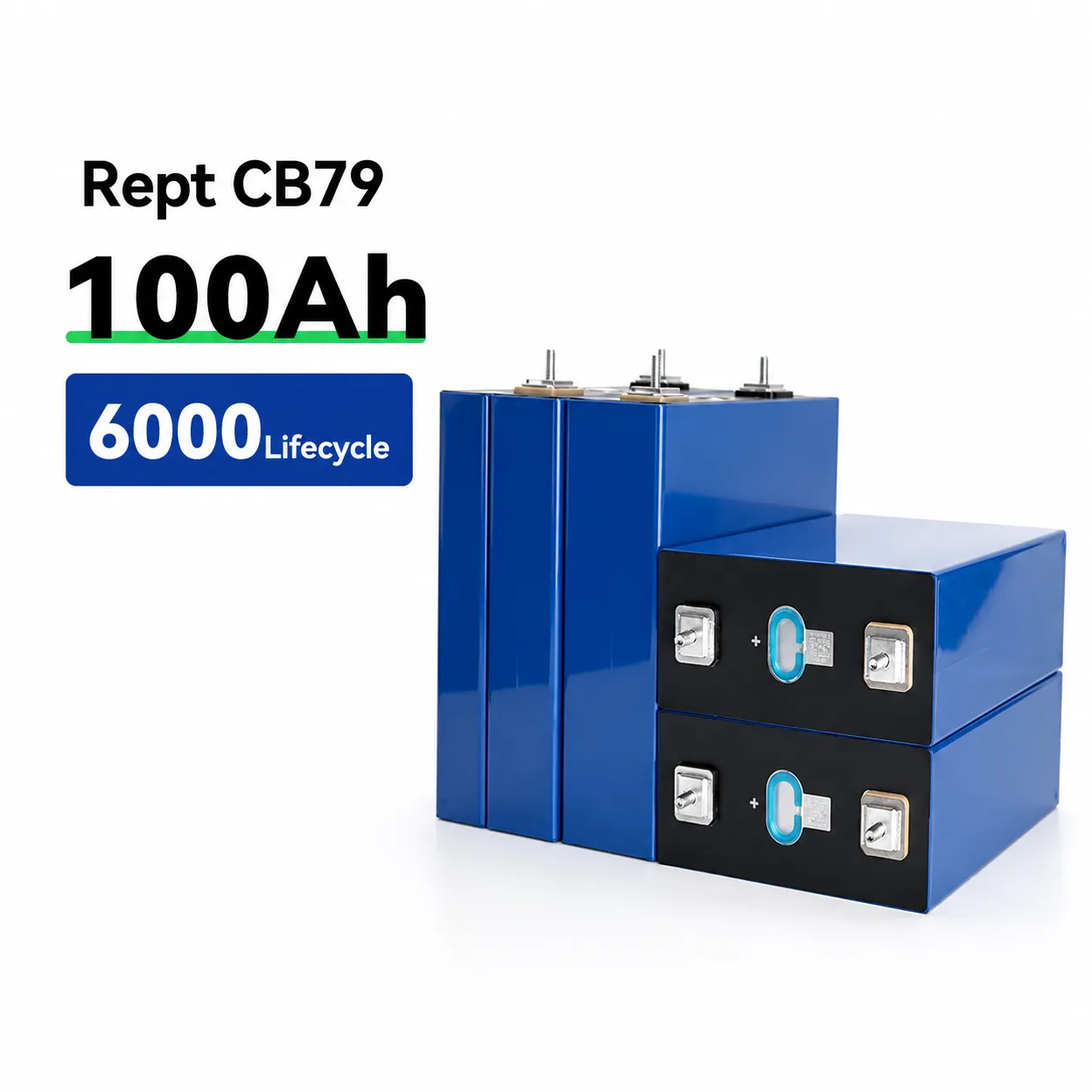
2V 105Ah A-Grade LiFePO4 Battery Cell is a high-performance prismatic Lithium Iron Phosphate cell designed for electric vehicles, EV bikes, energy-storage systems, solar batteries, inverter batteries and other high-power battery applications
Featuring 105Ah capacity, 3
2V nominal voltage, 0
28mΩ internal resistance and a 6000-cycle life specification, the EVE LF105 offers an excellent combination of energy capacity, low resistance and long service life
Tip: Scroll inside the gallery to browse all images.
Product Description
Short Description
The EVE LF105 3.2V 105Ah A-Grade LiFePO4 Battery Cell is a high-performance prismatic Lithium Iron Phosphate cell designed for electric vehicles, EV bikes, energy-storage systems, solar batteries, inverter batteries and other high-power battery applications.
Featuring 105Ah capacity, 3.2V nominal voltage, 0.28mΩ internal resistance and a 6000-cycle life specification, the EVE LF105 offers an excellent combination of energy capacity, low resistance and long service life.
With 3C discharge capability, this cell is particularly suitable for applications requiring higher power output, making it an excellent choice for electric vehicles, electric bikes, scooters and other high-current battery systems.
Product Overview
The EVE LF105 is an A-Grade 3.2V 105Ah LiFePO4 prismatic cell designed for professional battery-pack construction.
Its LiFePO4 chemistry provides a stable and durable platform for applications requiring frequent charging and discharging.
The combination of 105Ah capacity, 0.28mΩ internal resistance, 6000-cycle specification and 3C discharge capability makes the LF105 suitable for both energy-storage and high-power applications.
It can be assembled into different battery configurations using series and parallel connections, allowing users to build 12V, 24V, 48V/51.2V and higher-voltage battery systems.
Key Features
EVE LF105 LiFePO4 Cell
A-Grade Cell
3.2V Nominal Voltage
105Ah High Capacity
Approx. 336Wh Nominal Energy
6000 Cycle Life
0.28mΩ Internal Resistance
3C Discharge Capability
High-Power Battery Cell
Large-Format Prismatic Design
Stable LiFePO4 Chemistry
Suitable for Electric Vehicles
Suitable for Electric Bikes
Suitable for Electric Scooters
Suitable for Solar Battery Packs
Suitable for Inverter Batteries
Suitable for UPS Systems
Suitable for Home Energy Storage
Suitable for Commercial Energy Storage
Suitable for Off-Grid Systems
Suitable for Custom Lithium Battery Packs
Technical Specifications
Specification Details
Brand EVE
Model LF105
Cell Grade A Grade
Chemistry LiFePO4
Cell Type Prismatic
Nominal Voltage 3.2V
Nominal Capacity 105Ah
Nominal Energy Approx. 336Wh
Internal Resistance 0.28mΩ
Cycle Life 6000 Cycles*
Discharge Capability 3C
Application EV, Solar, Inverter, UPS & Energy Storage
*Actual cycle life depends on charging/discharging current, depth of discharge, temperature, BMS settings, cell balancing and operating conditions.
EVE A-Grade LF105 Cell
The EVE LF105 is specified as an A-Grade LiFePO4 cell, making it suitable for professional battery-pack assembly.
A-Grade cells are preferred for applications where consistent electrical characteristics and reliable long-term performance are important.
For battery-pack construction, cells should preferably be matched according to:
Voltage
Capacity
Internal resistance
State of charge
Overall condition
Properly matched cells can help improve the consistency and performance of the complete battery pack.
0.28mΩ Low Internal Resistance
The EVE LF105 has a specified internal resistance of:
0.28mΩ
Low internal resistance can help reduce voltage drop and internal heat generation when the cell is operating under load.
This characteristic is particularly useful in high-current applications such as electric vehicles and high-power battery systems.
Actual measured resistance may vary depending on:
Cell temperature
State of charge
Measurement method
Testing equipment
Cell condition
6000 Cycle Life
The EVE LF105 is specified for:
6000 Cycles
This makes it suitable for applications involving frequent charging and discharging.
The cell can be used in:
Electric vehicles
Electric bikes
Electric scooters
Solar energy storage
Inverter batteries
UPS systems
Home backup
Commercial energy storage
Off-grid systems
Actual cycle life depends on operating conditions, including depth of discharge, charging voltage, charging current, discharge current, temperature and BMS configuration.
3C Discharge Capability
One of the important advantages of the EVE LF105 is its:
3C Discharge Capability
For a 105Ah cell:
3C = approximately 315A
This makes the cell suitable for applications requiring relatively high current output.
The actual usable current in a complete battery depends on the BMS rating, cables, busbars, terminals, fuse, temperature and overall battery design.
For EV applications, the complete battery pack must be designed according to the motor controller's continuous and peak current requirements.
Why EVE LF105 Is Suitable for Electric Vehicles
The EVE LF105 is particularly suitable for EV battery construction because it combines:
105Ah Capacity
3.2V Nominal Voltage
0.28mΩ Low Internal Resistance
6000 Cycle Specification
3C Discharge Capability
LiFePO4 Chemistry
These characteristics make it suitable for compatible:
Electric Bikes
Electric Scooters
Electric Tricycles
Low-Speed EVs
Utility EVs
Golf Carts
Electric Mobility Systems
Other High-Current Applications
For EV applications, the number of cells and series/parallel configuration should be selected according to the required system voltage, motor power, controller current and desired range.
Nominal Energy
One EVE LF105 cell provides approximately:
3.2V × 105Ah = 336Wh
Therefore:
Nominal Energy ≈ 336Wh / 0.336kWh
The total energy of a battery pack depends on the number of cells connected in series and parallel.
Battery Configuration Examples
4S 105Ah – 12.8V 105Ah
Using 4 cells in series:
4 × 3.2V = 12.8V
Nominal energy:
12.8V × 105Ah = 1.344kWh
Suitable for a 12V-class LiFePO4 battery.
8S 105Ah – 25.6V 105Ah
Using 8 cells in series:
8 × 3.2V = 25.6V
Nominal energy:
25.6V × 105Ah = 2.688kWh
Suitable for a 24V-class LiFePO4 battery.
16S 105Ah – 51.2V 105Ah
Using 16 cells in series:
16 × 3.2V = 51.2V
Nominal energy:
51.2V × 105Ah = 5.376kWh
Suitable for 48V/51.2V-class LiFePO4 battery systems.
Parallel Configuration
Parallel connections increase the total battery capacity while maintaining the same nominal voltage.
Configuration Approx. Capacity
1P 105Ah
2P 210Ah
3P 315Ah
4P 420Ah
For example:
16S2P = 51.2V 210Ah
Nominal energy:
10.75kWh
The final configuration should be selected according to the required system voltage, capacity, BMS, inverter, motor controller and application.
Suitable Applications
🚗 Electric Vehicles
The 3C discharge capability and low internal resistance make the LF105 suitable for compatible EV battery packs.
🛵 Electric Bikes & Scooters
Suitable for high-capacity LiFePO4 battery packs for compatible electric bikes and scooters.
☀️ Solar Energy Storage
Suitable for building long-life LiFePO4 batteries for solar energy-storage systems.
⚡ Inverter Batteries
Can be used to construct compatible 12V, 24V and 48V/51.2V inverter batteries.
🔋 UPS Systems
Suitable for compatible LiFePO4 UPS and backup-power systems.
🏠 Home Energy Storage
Can be used for residential backup and energy-storage applications.
🏢 Commercial Energy Storage
The 105Ah capacity and long cycle-life specification make it suitable for commercial energy-storage projects.
🌐 Off-Grid Systems
Suitable for renewable-energy and off-grid battery systems.
Why Choose EVE LF105 105Ah A-Grade Cell?
The EVE LF105 combines:
A-Grade Cell Quality
105Ah High Capacity
3.2V Nominal Voltage
0.28mΩ Internal Resistance
6000 Cycle Specification
3C Discharge Capability
LiFePO4 Stable Chemistry
This combination makes it a strong option for users looking for a long-life, high-capacity and high-power LiFePO4 cell, particularly for EV and energy-storage applications.
Recommended Battery Assembly
For professional battery construction:
Use cells of the same model and capacity.
Preferably use cells from the same batch.
Match cell voltage before assembly.
Check internal resistance.
Properly balance cells.
Use a suitable LiFePO4 BMS.
Use correctly rated busbars.
Use appropriately sized DC cables.
Provide proper insulation.
Use suitable fuse/breaker protection.
Provide proper mechanical cell support.
Configure the BMS according to LiFePO4 requirements.
Test the completed battery before commissioning.
Package Includes
1 × EVE LF105 3.2V 105Ah A-Grade LiFePO4 Prismatic Cell
Not Included
BMS
Busbars
Battery Box
Charger
Cables
Cell Supports
Fuse/Breaker
Battery Assembly
Important Note
The specifications in this listing are based on the information provided by you and the supplied product image, including A-Grade cell quality, 0.28mΩ internal resistance, 6000-cycle specification and 3C discharge capability.
The cycle life and discharge capability are specification/test-condition ratings. Actual performance depends on charging/discharging conditions, depth of discharge, temperature, BMS settings, cell balancing and the overall battery-pack design.
For EV applications, the complete battery should be designed according to the motor/controller's continuous and peak current requirements, with an appropriately rated BMS, cables, busbars, terminals and protection system.
Frequently Asked Questions
The EVE LF105 is a 3.2V 105Ah A-Grade LiFePO4 prismatic battery cell designed for professional battery-pack construction.
Yes. The EVE LF105 offered here is specified as an A-Grade LiFePO4 cell.
The nominal capacity is 105Ah.
The nominal voltage is 3.2V.
It uses Lithium Iron Phosphate (LiFePO4) chemistry.
The cell is specified with a 6000-cycle life under suitable operating and test conditions.
No. Actual cycle life depends on depth of discharge, charging/discharging current, temperature, BMS settings and operating conditions.
The specified internal resistance is 0.28mΩ.
Low internal resistance can help reduce voltage drop and internal heat generation during high-current operation.
Approximately 3.2V × 105Ah = 336Wh nominal energy.
The cell is specified with 3C discharge capability.
3C corresponds to approximately 315A based on the 105Ah capacity.
Not necessarily. The complete battery's allowable current depends on the BMS, cables, busbars, terminals, temperature and overall battery design.
Yes. Its 3C discharge capability, 105Ah capacity and low internal resistance make it suitable for compatible EV battery applications.
Yes. It can be used to build compatible LiFePO4 batteries for electric bikes and other electric mobility applications.
Yes. Properly configured LF105 battery packs can be used in compatible electric scooters.
Yes. They are suitable for building LiFePO4 batteries for solar energy-storage systems.
Yes. They can be used to construct compatible 12V, 24V and 48V/51.2V inverter batteries.
Yes. They are suitable for compatible LiFePO4 UPS and backup-power applications.
Yes. 4 cells in series (4S) create a 12.8V 105Ah LiFePO4 battery.
Yes. 8 cells in series (8S) create a 25.6V 105Ah battery.
Yes. 16 cells in series (16S) create a 51.2V 105Ah battery.
Approximately 1.34kWh nominal energy.
Approximately 2.69kWh nominal energy.
Approximately 5.38kWh nominal energy.
Yes. Parallel connections can increase the total Ah capacity while maintaining the same nominal voltage.
Two 105Ah cells in parallel provide approximately 210Ah.
Yes. A 16S2P configuration provides approximately 51.2V 210Ah and around 10.75kWh nominal energy.
It is a large-format prismatic LiFePO4 cell.
Its low 0.28mΩ internal resistance and 3C discharge capability make it suitable for applications requiring relatively high current output.
Yes. A suitable LiFePO4 BMS should be used when multiple cells are assembled into a battery pack.
Yes, provided the JK BMS has the appropriate series configuration, current rating and LiFePO4 settings for the battery pack.
Yes. It is recommended to match cells according to voltage, capacity, internal resistance and overall condition.
It is recommended to use cells of the same model, capacity and similar electrical characteristics instead of mixing different cell models or brands.
Applications include EVs, electric bikes, electric scooters, solar storage, inverter batteries, UPS systems, home backup, commercial energy storage and off-grid systems.
Yes. Their high capacity and long-cycle specification make them suitable for compatible solar energy-storage battery packs.
LiFePO4 chemistry is widely used for energy storage because of its combination of stability, long cycle life and suitability for repeated charging and discharging.
Yes. They can be assembled into custom battery packs using appropriate series/parallel configurations, BMS, busbars and protection components.
Check the cell voltage, capacity, internal resistance, cell matching, BMS rating, required system voltage, cable size, busbars, terminals and protection devices.
The LF105 combines A-Grade quality, 105Ah capacity, 0.28mΩ internal resistance, 6000-cycle specification and 3C discharge capability, making it a strong choice for EV, solar, inverter and high-power energy-storage battery applications.