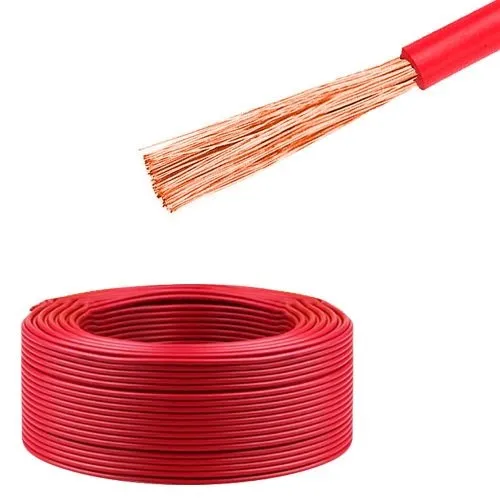
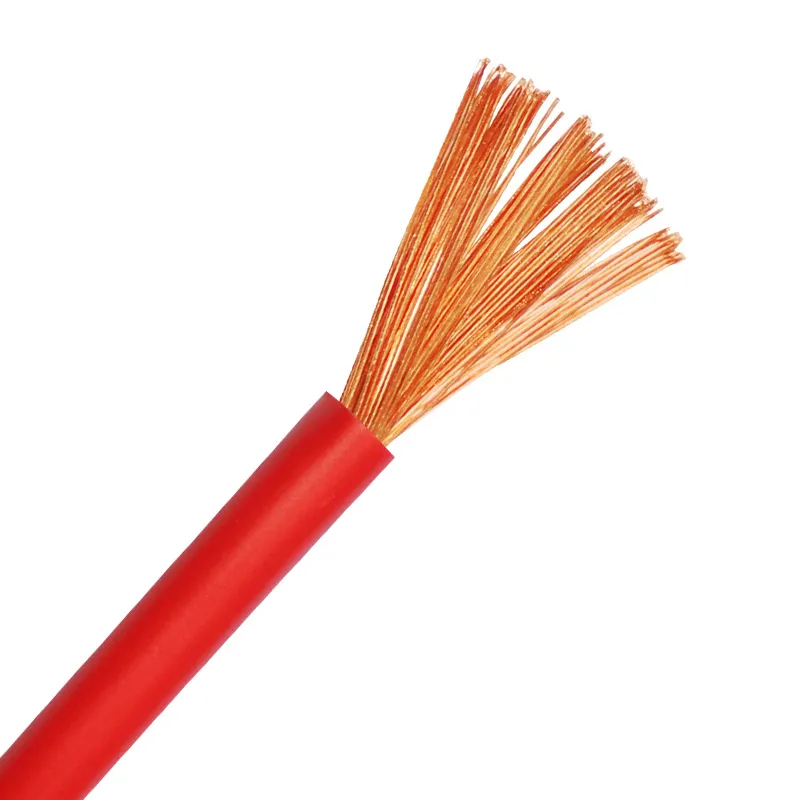
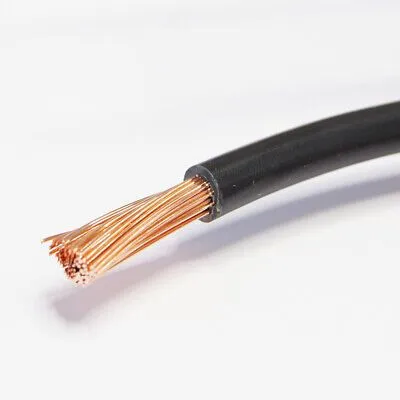
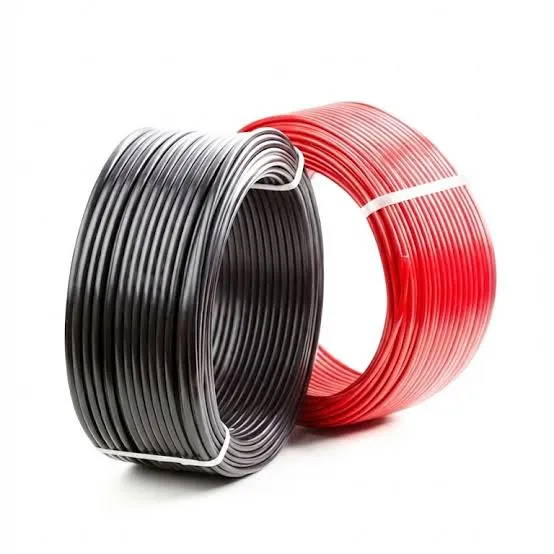
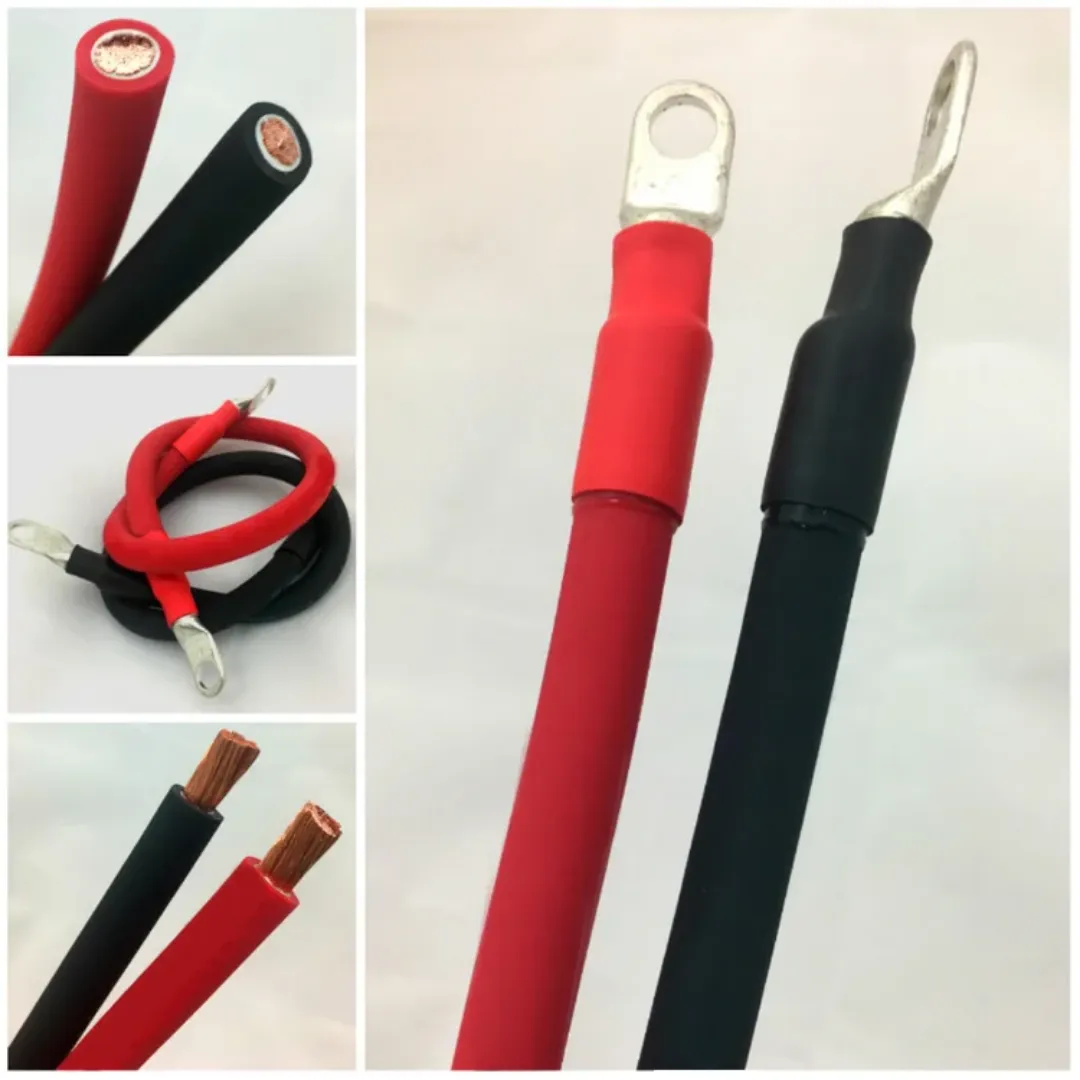
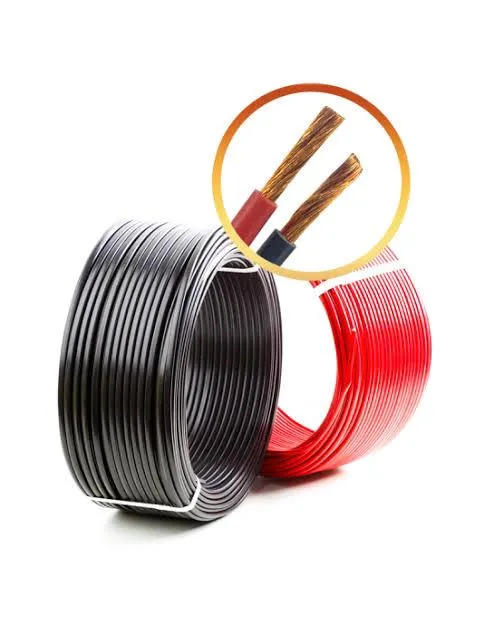
The 10mm² Pure Copper Flexible DC Battery Cable is a full-gauge, flexible DC power cable designed for reliable battery and electrical connections
Manufactured with a pure copper conductor, it provides excellent electrical conductivity, low resistance and dependable power transfer
Its flexible multi-strand construction makes it easy to install inside LiFePO4 battery boxes, battery cabinets, solar systems, inverter systems, UPS systems and EV battery packs
The 10mm² cable i
Tip: Scroll inside the gallery to browse all images.
Product Description
Short Description
The 10mm² Pure Copper Flexible DC Battery Cable is a full-gauge, flexible DC power cable designed for reliable battery and electrical connections. Manufactured with a pure copper conductor, it provides excellent electrical conductivity, low resistance and dependable power transfer.
Its flexible multi-strand construction makes it easy to install inside LiFePO4 battery boxes, battery cabinets, solar systems, inverter systems, UPS systems and EV battery packs.
The 10mm² cable is particularly suitable for low-to-medium current battery connections, where flexibility, efficient power transfer and proper cable sizing are important.
Key Features
10mm² Full Gauge
Pure Copper Conductor
Flexible Multi-Strand Construction
Excellent Electrical Conductivity
Low Electrical Resistance
Efficient DC Power Transfer
Suitable for LiFePO4 Batteries
Suitable for Lithium Battery Systems
Suitable for Solar Systems
Suitable for Inverter Batteries
Suitable for UPS Systems
Suitable for Battery Cabinets
Suitable for EV Battery Applications
Easy to Bend and Route
Suitable for BMS & Battery Connections
Suitable for Positive & Negative DC Connections
Technical Specifications
Specification Details
Cable Type Flexible DC Battery Cable
Conductor Material Pure Copper
Cable Size 10mm²
Gauge Full Gauge
Construction Multi-Strand Flexible Copper
Application DC Battery & Power Systems
Polarity Positive (+) / Negative (−)
Battery Chemistry LiFePO4 & Compatible Lithium Batteries
Applications Solar, Inverter, UPS, EV & Energy Storage
Important: Actual current-carrying capacity depends on cable length, insulation rating, ambient temperature, installation method, bundling and allowable voltage drop.
Where Can 10mm² Cable Be Used?
🔋 12V LiFePO4 Batteries
10mm² pure copper cable can be suitable for many 12V-class LiFePO4 battery connections, particularly low-to-medium current applications.
Examples include:
12.8V 27Ah
12.8V 50Ah
12.8V 100Ah
For higher-current 12V applications, 16mm² or 25mm² may be more appropriate depending on the actual current and cable length.
⚡ 24V LiFePO4 Batteries
10mm² cable can be useful for many 24V battery systems where the required current is within the cable's permissible operating range.
Examples:
25.6V 50Ah
25.6V 100Ah
25.6V 200Ah
🔋 48V / 51.2V LiFePO4 Batteries
10mm² cable can be particularly useful for lower-current 48V/51.2V battery applications, because higher voltage requires less current for the same power.
Examples:
51.2V 50Ah
51.2V 100Ah
For high-power inverter systems, cable sizing should be calculated according to the actual DC current.
Example Power Applications
For a 51.2V system with a 3kW load:
3000W ÷ 51.2V ≈ 58.6A
A 10mm² cable may be suitable for some short-run installations around this current, but the final selection must consider cable length, insulation rating, temperature and allowable voltage drop.
For a 12.8V system with the same 3kW load:
3000W ÷ 12.8V ≈ 234A
In this situation, 10mm² would not normally be an appropriate choice for the main battery-to-inverter connection; a substantially larger conductor or appropriately designed parallel conductors would be required.
This demonstrates why cable size should be selected based on current and system voltage, not battery Ah capacity alone.
Suitable LiFePO4 Battery Applications
10mm² cable can be used for appropriately designed:
12V 27Ah LiFePO4 Batteries
12V 50Ah LiFePO4 Batteries
12V 100Ah LiFePO4 Batteries
24V 50Ah LiFePO4 Batteries
24V 100Ah LiFePO4 Batteries
24V 200Ah LiFePO4 Batteries
48V / 51.2V 50Ah LiFePO4 Batteries
48V / 51.2V 100Ah LiFePO4 Batteries
However, the battery's Ah capacity does not determine the cable size by itself. The maximum continuous current, peak current and cable length are the key considerations.
Why Pure Copper?
Pure copper is widely used for battery and DC power connections because of its excellent electrical conductivity.
Advantages
Excellent electrical conductivity
Low electrical resistance
Efficient power transfer
Reduced voltage drop
Good flexibility
Suitable for DC battery applications
Reliable terminal connections
Flexible Multi-Strand Construction
The flexible multi-strand construction makes the 10mm² cable easy to route inside:
Battery boxes
Battery cabinets
Solar systems
Inverter systems
UPS systems
EV battery packs
Energy-storage systems
It can be conveniently routed around BMS terminals, battery terminals, busbars and other DC components.
Suitable Applications
☀️ Solar Energy Storage
Suitable for appropriate DC connections in solar battery and energy-storage systems.
⚡ Inverter Systems
Can be used for suitable battery-side connections where the required current is within the cable's capability.
🔋 Battery Packs
Useful for internal battery wiring, BMS connections and other appropriately rated DC connections.
🏠 Home Backup
Suitable for low-to-medium current battery backup applications.
🚗 EV Applications
Can be used for suitable EV battery wiring where current and thermal requirements are within the cable's capability.
🔌 UPS Systems
Suitable for compatible low-to-medium current DC battery connections.
10mm² vs 16mm² vs 25mm²
Feature 10mm² 16mm² 25mm²
Conductor Pure Copper Pure Copper Pure Copper
Cross Section 10mm² 16mm² 25mm²
Flexibility Excellent Excellent Excellent
Typical Application Low/Medium Current Medium/High Current Higher Current
Space Required Lowest Medium Higher
Cable Weight Lowest Medium Highest
LiFePO4 Use ✅ ✅ ✅
Solar Use ✅ ✅ ✅
Inverter Use ✅ ✅ ✅
High-Power Use Limited Depends on Current Better suited
Simple Selection Guide
10mm²: Low-to-medium current applications
16mm²: Medium-to-higher current applications
25mm²: Higher-current applications
The actual cable size should always be calculated based on current, voltage, cable length and installation conditions.
Installation Recommendations
For safe and reliable installation:
Use correctly sized cable lugs.
Use proper crimping tools.
Install an appropriately rated DC fuse or breaker.
Keep cable runs as short as practical.
Avoid sharp bends close to terminals.
Ensure terminals are properly tightened.
Protect the cable from abrasion and mechanical damage.
Avoid excessive heating or bundling without adequate thermal consideration.
Select cable size according to actual continuous and peak current.
Package Includes
1 × 10mm² Pure Copper Flexible DC Battery Cable
Suitable for appropriate positive (+) and negative (−) DC battery connections.
Important Note
The 10mm² size should not be selected simply based on battery capacity such as 50Ah, 100Ah or 200Ah. The correct cable size depends primarily on the maximum continuous current, peak current, system voltage, cable length, installation method and permissible voltage drop.
For high-power inverter and battery applications, calculate the required cable size before installation.
Frequently Asked Questions
A 10mm² battery cable is a DC power cable with a 10mm² conductor cross-sectional area, designed for suitable battery, solar, inverter, UPS and DC power applications.
Yes. The cable is specified with a pure copper conductor.
Yes. It is specified as a full-gauge 10mm² cable.
Yes. Its multi-strand construction provides flexibility for battery and DC installations.
Yes. It is suitable for many LiFePO4 battery applications when the current, cable length and installation conditions are appropriate.
Yes. It can be used for suitable 12V-class applications where the required current is within the cable's permissible operating range.
Yes. It can be used for compatible 24V-class battery systems.
Yes. It can be suitable for many 48V/51.2V applications, particularly lower-to-medium current connections.
Yes. It can be suitable for many 27Ah battery applications, depending on the BMS and maximum load current.
Yes. It can be used where the required continuous and peak current is suitable for a 10mm² cable.
Yes, for suitable current levels. Battery capacity alone does not determine the required cable size.
It may be suitable for certain applications, but the maximum current and cable length should be checked before installation.
It may be used for suitable lower-current connections, but it should not automatically be selected for the main high-current connection simply because the battery is 314Ah.
It can be used for LiFePO4 batteries, solar systems, inverter batteries, UPS systems, battery cabinets, EVs and energy-storage systems.
Yes, provided the cable is correctly sized for the inverter's maximum DC current and cable length.
Yes. It can be used for suitable DC battery connections in solar energy-storage systems.
Yes. It can be used for compatible low-to-medium current DC battery connections.
Yes. It can be used in appropriate EV battery wiring applications where the current and thermal requirements are within the cable's capability.
Pure copper offers excellent electrical conductivity and low resistance, helping provide efficient DC power transfer.
Flexible construction makes the cable easier to bend and route around battery terminals, BMS connections, busbars and inverter terminals.
No. The permissible current depends on cable length, insulation rating, ambient temperature, installation method, bundling and allowable voltage drop.
No. Cable sizing should primarily consider maximum continuous current, peak current, system voltage and cable length.
It can be suitable for some systems, but the required current should be calculated based on battery voltage and inverter efficiency.
It depends heavily on the battery voltage. A 3kW load at 51.2V requires much less current than the same load at 12.8V, so the complete system must be evaluated.
Generally, an 8kW inverter can require very high DC current, so 10mm² should not be assumed to be suitable for the main battery connection. A proper cable-sizing calculation is required.
Yes. It can be used for both positive (+) and negative (−) DC connections.
Yes. Appropriate cable lugs can be installed using a proper crimping method and tool.
Yes, where the BMS terminal and required current are compatible with a 10mm² conductor.
Yes. A properly rated DC fuse or breaker is recommended as part of a correctly designed battery system.
Yes. Its flexible construction makes it convenient for internal battery wiring and compact battery enclosures.
It can be suitable for appropriate current levels. Shorter cable runs generally reduce voltage drop.
Longer cable runs create greater resistance and voltage drop. Therefore, cable length must be considered when selecting conductor size.
Consider continuous current, peak current, system voltage, cable length, temperature, insulation rating, installation method and permissible voltage drop.
Yes. It can be used for appropriately designed low-to-medium current home backup systems.
Yes, for suitable applications where the cable's current and thermal requirements are satisfied.
Yes. It can be used for suitable JK BMS battery connections when the BMS terminals and required current are compatible.
Yes. It can be used for suitable battery-side DC connections to compatible hybrid inverters.
Its 10mm² full-gauge pure copper conductor and flexible multi-strand construction make it suitable for many LiFePO4 battery wiring applications.
Use suitable lugs, proper crimping tools, secure terminal connections and appropriate DC protection. Keep cable runs as short as practical.
No. The correct cable size depends on maximum current, system voltage, cable length, installation conditions and permissible voltage drop. For high-current applications, a larger cable such as 16mm² or 25mm² may be required.